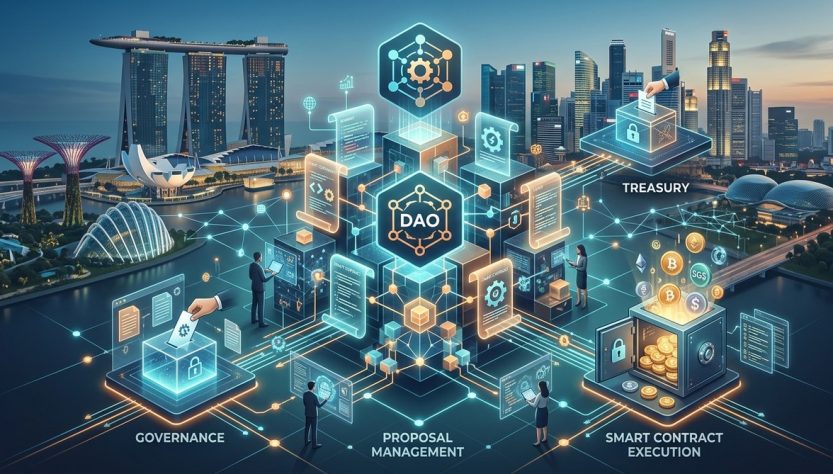
If you have ever wanted to launch an organization that runs itself, where rules are code and members vote with tokens, you are not alone. That is exactly what a Decentralized Autonomous Organization (DAO) does. With smart contracts handling everything from treasury management to proposal voting, building a DAO is like creating a transparent, global cooperative that never sleeps. And the best part? You can do it today with open-source tools and a bit of Solidity know-how.
To build a DAO, start by defining its purpose and membership model. Then architect smart contracts using proven frameworks like OpenZeppelin. Write contracts for a governance token, a treasury, and a voting mechanism. Deploy on a testnet, audit thoroughly, and finally launch on mainnet with a clear governance process. This guide walks you through each technical step.
What You Need Before You Start
Before you write a single line of code, you need a clear vision. Ask yourself: What decisions will this DAO make? Who gets to vote? How are funds managed? The answers shape your smart contract architecture.
You also need a solid foundation in blockchain basics. If terms like gas, nonce, or ABI sound foreign, start with our guide on how distributed ledgers actually work. You will also want familiarity with the Ethereum Virtual Machine. See how smart contracts actually execute on Ethereum Virtual Machine for a deep dive.
For the tech stack, 2026 standards lean heavily on:
- Solidity for contract development (here is why Solidity remains the dominant smart contract language in 2026)
- Hardhat or Foundry for testing and deployment
- OpenZeppelin Contracts for battle-tested libraries
- A frontend framework like Next.js with ethers.js or wagmi
Step 1: Define Your DAO’s Purpose and Membership Model
Your DAO needs a reason to exist. Maybe it manages a community treasury, governs a DeFi protocol, or coordinates a group of creators in Southeast Asia. The purpose directly influences membership.
There are four common membership models:
- Token-based – Anyone who holds the governance token can vote. Easy to distribute but vulnerable to whale attacks.
- Share-based – Members must buy or earn non-transferable shares. More control over who joins.
- NFT-gated – Ownership of a specific NFT grants voting power. Great for art communities.
- Reputation-based – Voting weight comes from on-chain activity or contributions. Hard to implement but resistant to money-driven attacks.
Most DAOs in 2026 combine token-based voting with some form of delegation to keep decision-making efficient.
Step 2: Choose Your Smart Contract Architecture
You do not have to reinvent the wheel. Several frameworks provide modular, audited contracts that you can assemble like Lego blocks.
| Framework | Best For | Key Contracts Provided | Notes |
|---|---|---|---|
| OpenZeppelin Governor | Most DAOs | Governor, Timelock, Token (ERC20Votes) | Industry standard, well audited, flexible |
| Aragon OSx | Plug-and-play DAOs | Plugin-based system, voting, treasury | Suited for non-developers but still technical |
| Compound GovernorBravo | DeFi governance | GovernorBravoDelegate, Timelock | Proven in production, simple but rigid |
| Moloch v3 | Small grant DAOs | UberHaus, Minion contracts | Minimal gas, but limited features |
For most projects, OpenZeppelin Governor with a Timelock is the safest bet. It separates voting from execution, giving members time to react before any action goes live.
Step 3: Write Your Core Smart Contracts
Now you get your hands dirty. You need at least three contracts:
- A governance token (ERC20 with voting power tracking, like
ERC20Votes) - A governor contract that defines proposal creation, voting, and execution
- A treasury or timelock that holds assets and enforces the delay
Here is a barebones example of a governance token using Solidity:
// SPDX-License-Identifier: MIT
pragma solidity ^0.8.20;

import "@openzeppelin/contracts/token/ERC20/extensions/ERC20Votes.sol";

contract MyDAOToken is ERC20Votes {
    constructor() ERC20("MyDAOToken", "MDT") ERC20Permit("MyDAOToken") {
        _mint(msg.sender, 1_000_000 * 10 ** decimals());
    }

    function _update(address from, address to, uint256 value)
        internal
        override(ERC20Votes)
    {
        super._update(from, to, value);
    }

    function nonces(address owner) public view override returns (uint256) {
        return super.nonces(owner);
    }
}
Notice the use of ERC20Votes. This extension automatically handles delegation and checkpointing, which are required for the governor to know how many tokens each address holds at each proposal.
The governor contract can be a simple Governor with GovernorVotes, GovernorTimelockControl, and a TimelockController. OpenZeppelin provides a step-by-step wizard on their website.
Step 4: Build the Voting Mechanism
A voting mechanism must be resistant to attacks, especially front-running and bribery. The standard today is commit-reveal voting combined with a quorum threshold.
Your governor contract should:
- Define a voting delay (time between proposal submission and voting start)
- Set a voting period (how long voting stays open)
- Enforce a quorum (minimum percentage of total supply that must vote)
- Use delegation so holders can delegate power without transferring tokens
A common mistake is leaving the quorum too low. If only a few whales can pass proposals, the DAO is no longer decentralized. Set quorum to at least 4% of total supply, and use dynamic quorum that adjusts based on total participation.
Step 5: Deploy and Configure Your DAO
Deployment is not just a single transaction. It involves a sequence of steps, ideally automated with a script.
- Deploy the Timelock Controller – Set the minimum delay (e.g., 2 days) and the proposer/executor roles.
- Deploy the governance token – Mint the initial supply to the treasury or to early contributors.
- Deploy the Governor contract – Pass the token address, quorum, voting delay, and voting period.
- Transfer admin roles – The Timelock controller should be the admin of the Governor, and the DAO itself should own the treasury.
- Airdrop or distribute tokens – Use a Merkle tree for gas-efficient distribution.
- Test on a testnet – Deploy on Sepolia or an L2 like Arbitrum Sepolia. Run through proposals to catch bugs.
Gas costs are a real concern in 2026, especially on Ethereum mainnet. Consider deploying on a low-fee L2 or using gas optimization techniques that reduce smart contract costs by 40%. Also learn about upgrading smart contracts without breaking immutability in case you need to patch vulnerabilities later.
Step 6: Launch and Govern
Once deployed, you need to bootstrap participation. Create a frontend where members can delegate tokens, submit proposals, and vote. Tools like Snapshot (for off-chain voting) plus Tally (for on-chain execution) are popular.
Set up a multisig as a safety fallback for emergency actions (like pausing a contract). Even the most decentralized DAOs keep a recovery safe.
Monitor your contracts constantly. Use Tenderly or Defender to set alerts on large proposals or unusual activity.
Common Pitfalls to Avoid
Even experienced blockchain teams make mistakes when they build a DAO. Here is a table of the most frequent errors and how to avoid them:
| Mistake | Why It Hurts | How to Fix |
|---|---|---|
| Concentrated voting power | A single whale can push any proposal. | Implement quadratic voting or delegation caps. |
| No timelock | Proposals execute instantly, giving no time to react. | Always use a TimelockController with at least 2 days delay. |
| Unclear proposal thresholds | Anyone can spam proposals. | Require a minimum token balance to propose (e.g., 1% of supply). |
| Poor auditing | Vulnerabilities get exploited. | Pay for a professional audit; also check 7 critical vulnerabilities every smart contract auditor looks for. |
| Ignoring regulatory compliance | Legal trouble in places like Singapore. | Consult local laws. Read about why decentralized autonomous organizations are attracting enterprise investment and the compliance implications. |
Your Next Move in DAO Development
Building a DAO is a journey from code to community. You will learn as much from the social layer as from the smart contract layer. Start small: launch on a testnet, invite a few friends, and pass real proposals. Iterate on the parameters until governance feels natural.
Southeast Asia, and especially Singapore, is becoming a hub for DAO innovation. As you grow, you may want to connect with our team at DLT Singapore for consultation on enterprise-grade deployments or regulatory guidance.
Now go write that governor contract. Your future members are waiting.